

Called to do more than a good job
We don’t hear the word ‘vocation’ much these days, but for a Christian it is an everyday concern. For us, our work is much more than a job. And that’s not just for those who work for the church in a formal capacity. We are all called to live – and work – for Christ, serving him and his kingdom in whatever we do and wherever we do it. We asked four people to share their stories about the way in which their faith underpins their daily work, while Dr Andrew Pfeiffer from Australian Lutheran College offers a theological reflection on this topic.
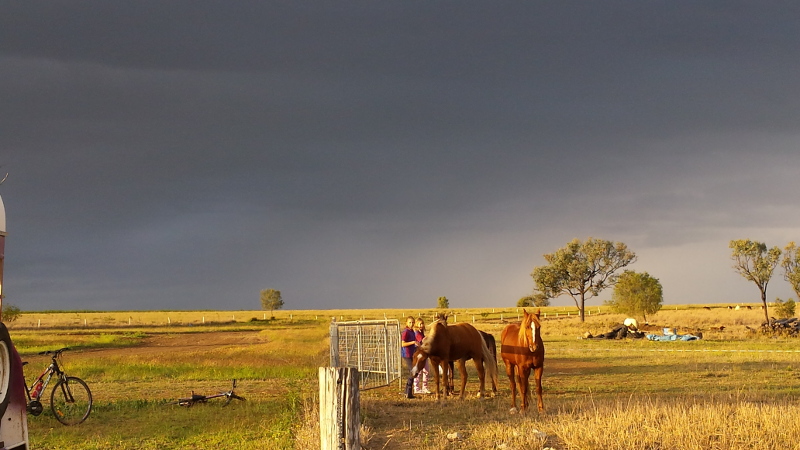
Farming takes faith
by Katy Kucks
When I attended Lutheran Youth of Queensland camps more than 25 years ago and met farmers for the first time, little did I know I would marry one and leave Brisbane behind for rural central Queensland and the farming life.
At first there was culture shock. The nearest Kmart was about 270 kilometres away, when previously I had walked to work at one. Gone were city conveniences and opportunities, but wide open were the skies and freedom of a different sort.
It’s been a great adventure and learning journey. Faith has also been central and critical throughout.
‘The farmer’ Trevor, my new husband, enjoyed teasing the city girl. He put me on a tractor with some implement behind it and sent me out with vague instructions in a 500–acre (202–hectare) paddock, blissfully leaving me until dark. A few weeks later this joke backfired in the form of weedy strips of ground I’d missed!
These days, the once naïve suburban girl is a wiser farmer’s wife – and company director! And working the land has changed as technology has advanced. Now we have ‘agribusiness’ and it is big business.
Yet the timeless constant is the struggle of coaxing food from the land on the driest, harshest habited continent. This is where our faith is a vibrant, living thing that sees us through. The Bureau of Meteorology website may offer my husband’s favoured forecast – but it’s only God who truly knows, gives and provides.
The intergenerational aspect of farming supports all members. My vocation as ‘farmer’s wife’ has allowed me to stay around for my children. Trevor’s parents (Barry and Kathy Kucks) bought the original properties, while Trevor’s two brothers and our eldest son Nathan are all on the land. It’s great to be able to work as a family, even though at times it calls for wisdom and even a break from each other.
But, above all, this vocation is a complete faith life. Would you be happy if, after working 12-hour days for three months and putting your own savings into your boss’s project, he refused to pay you because it didn’t rain? Or because it rained too much?
I’ve been on the land for 25 years and I’ve seen five droughts, one major flood, three minor floods, two mouse plagues and a few small bushfires. But we have also raised four children in fresh air and freedom, grown some bumper crops and produced top-shelf, grass-fed beef, all while knowing God is our strength and provider. The Lord of all creation created the great vista of sky and soil we are surrounded by every day at work.
Matthew 6:25–34 relates perfectly to God’s provision for my life on the land. In part it says: ‘So don’t worry about these things saying, ‘What will we eat? What will we drink? What will we wear? These things dominate the thoughts of unbelievers, but your heavenly Father already knows all your needs. Seek the Kingdom of God above all else and live righteously, and he will give you everything you need’ (NLT).
Katy Kucks is a member at Theodore Lutheran Church, Queensland.
Glorifying God at home
by Sarah Joy Fandrich
I am a pastor’s wife and stay-at-home, homeschooling mum to seven children. This is my career and calling, and in a way I view myself as a CEO. My aim is to do the job well for the benefit of our business – our family.
We educate our kids at home so we can more effectively live out Deuteronomy 6:4–9 in our family setting, including ‘Love the Lord your God with all your heart and with all your soul and with all your strength. These commandments that I give you today are to be on your hearts. Impress them on your children’. As Christian parents, our greatest desire is that our children know Christ as their Saviour. So, as we seek to teach them the faith, we discuss and debate it in our daily work. We encourage critical thought – why do we do what we do? Teaching our children about how God works in their world when things are not easy is the most important part of how I serve God.
We serve God as a family by participating in weekly worship, hospitality in our home, and including our visitors in family devotions. Most weeks I have conversations with other women, mums or homeschoolers and encourage them and point them to Jesus. I pray with them, in person, on the phone or even by private messages on Facebook. Encouraging others through conversation is another big part of how I personally serve God.
Faith in God is what keeps me sane. Many tell me they don’t have the patience to homeschool or have lots of kids – neither do I. Living in community is a difficult task, there are disagreements and sometimes fights. Children reveal our own sinfulness (perhaps I have many because God is showing me how sinful I am). Often my own sinfulness is revealed in theirs, bringing me to my knees before God and that’s the BEST place for a parent to be. As a mum, I need to acknowledge my own sin and weakness, not just to God, but also to my children.
Our seventh child was born in November and was not well in the early days. Constant exhaustion often leads me to tears and prayer. I have learnt to take life minute by minute. Thinking in moments helps me persist, especially in those ‘witching hours’ between 5.00pm and 7.00pm when the children seem to push my buttons. It’s then I’m reminded it’s just another hour until they are all in bed; just keep it together a bit longer.
As a pastor’s wife I serve our church by supporting my husband in his work. Pastoral ministry is a lot like housework in that there’s always more to be done. It’s a lot like raising kids in that there are often challenging behaviours to work with. I support my husband by keeping our home running smoothly, being present at many events, lots of listening, praying with him and encouraging him.
Being a career mum is tiring. I seek a home glorifying God in all we do with fun and service. I love it when that happens.
Sarah Joy Fandrich is a member of Burrumbuttock Lutheran Parish NSW.
Seeking his purpose
by Bob Thiele
Two years ago I received a letter from my superannuation fund. ‘Dear Mr Thiele, this is to inform you that your pension scheme has matured and you will no longer be required to pay into the scheme’. Confused, I phoned to query this. I was only 59. How could my pension have matured? Pensions are for old people! I was informed that the information was correct, that my contributions had ceased but my employer would pay into the scheme until February 2017 to take my pension to 75 per cent of my total salary indexed for life.
‘Just one moment, sir. Let me do a quick calculation. If you retire today, with tax offset, etc, etc, your pension will pay you virtually what you are taking home now.’ Pause while I take this in. ‘You mean that I am working for nothing now?’ I ask incredulously. ‘That is correct, sir. There is no financial benefit to continue to work.’ I wish that I did not know this.
Most people work to retire. I had to make a conscious decision to work when I didn’t need to. People now think me very strange, or stranger! Why work when you could live a life of leisure? I have asked myself the same question.
For me the answer is purpose. What is God’s purpose for me at this time in life? I do not feel that God is calling me to a life of surfing and gardening. I do still feel called to be in the same vocation I believe God called me to at six years of age when I decided to become a teacher. I have taught in disadvantaged state schools since I was 22 years old. My brother and sister became teachers in Lutheran schools. My conviction is that God wants Christian teachers in public schools and that’s where he wants me still.
Now as a principal of more than 20 years, I try to take God into every class, every meeting and every situation. I pray that he will give me the wisdom, words and actions to handle the challenges that get thrown at me. I trust he is using me to make a positive difference in the lives of the children and families with whom I work, serving his purpose.
He will make it clear to me when it is time to move on to the next stage of life. Whatever this will be, God will still have a purpose. I hope that it includes surfing.
Still, on days or weeks of high stress, or of not being able to turn off at night, waking at 2.00am due to stress, concerns about student behaviour, irate parents, staff performance, budget headaches, endless administration, early mornings, being last to leave, gaining wrinkles and grey hair, I think to myself, I don’t have to do this. I do it because I choose to. I do it because I am called.
Bob Thiele is a member at Seaford Lutheran Church, South Australia.
Seeing beyond the labels
by Greg Spann
I was at a dedication on New Year’s Day and was asked, ‘So what do you do at the hospital?’ ‘I’m a pharmacist’. Silence. But then with a smile, ‘So you must know all the good drugs’. I sighed a little, ‘No, I give the patients the drugs they need to counteract those drugs’.
And then the second most common question followed: ‘So why does it take so long to put the label on the box?’ Well, I’ll get back to that. But first a little about my vocation.
My journey to my current job started at school. I was good at science and, unimaginatively, thought I’d do a science degree.
Fortunately my father and my chemistry teacher suggested pharmacy. My first thought was what most people think of pharmacy – white coats behind a counter. But a lady at church commended the simple role of a pharmacist as an educator. The pharmacist doesn’t have appointments – they take as long or as little time as necessary to make sure the patient knows about their medication or condition. ‘Great’, I thought, ‘I can help people’.
I know that aspiration is very clichéd but, even now, after years of working, I still need to be reminded of it every day. ‘God’, I pray as I drive to work, ‘let me serve my patients today’. Even in a hospital you can get so task-orientated or performance-driven you can forget the person in the bed.
I know I’m guilty of that.
I really enjoyed studying pharmacy. The bodies God has given us are just so remarkable and fragile. This fascination and admiration turned me towards clinical pharmacy, as opposed to the business side of it, so I pursued a career in hospital pharmacy when I graduated.
Around that time I remember our small group leader talking often about Jesus’ desire to seek out the least and the lost. And as a follower of Jesus, this was my calling as well. But how could I seek the least and the lost as a hospital pharmacist? Who in our society are shunned and marginalised?
A few years into my career I found that space working in mental health. It is a space often shared by drug abuse and criminality. That’s where I’ve been for the past five years and I’m still thoroughly loving the work.
God is good. As Jesus says in Matthew, ‘Seek first the kingdom … and all these other things will be added to you’. I have been very blessed in my career – progression, job opportunities and income have come without seeking them for their own ends.
Every day I am able to meet people at their worst, discuss with them what’s brought them here and try to assist them to manage their medication to get them back on track. And sometimes I even have to put a label on their medication.
So why does it take a pharmacist so long to put a label on the box? Well, the label doesn’t take too long; determining whether the dose is going to kill you or treat you takes a little longer.
Greg Spann is a member at Our Saviour Lutheran Church, Rochedale, Queensland.
Serving God in daily life
by Andrew Pfeiffer
What is God’s call on our life? What does ‘vocation’ mean? How do we work out what God wants us to be and do in life?
Vocation does not just refer to paid employment. Rather, it is what God calls us to do. As Christians we have a number of different vocations, more than one calling.
Luther’s Small Catechism helps us on this point. There is a section in the catechism called The Household Chart. It is a list of Bible passages about different situations in life, including vocations. It teaches that, firstly as Christians, we all share the same calling, a common vocation. Secondly, it shows us we each have different callings, because we each live in different situations.
The Household Chart speaks to Christians in general (Romans 13:9; 1 Timothy 2:1). It teaches us about the common calling to love our neighbour (Ephesians 2:10), and to bring the world’s needs to God in prayer (1 Timothy 2:1-4). As God’s people, the church gathers to receive forgiveness, life and salvation through absolution, hearing God’s word and participating in the Lord’s Supper. In that assembly we share a calling to pray for all people (Lutheran Hymnal with Supplement, pp13-14; 30; 67-68). Leaving with God’s blessing, we are called to serve our neighbour sacrificially (Romans 12). And as we serve, we are to be prepared to share our hope in Christ (1 Peter 3:15).
The Household Chart teaches that the Bible also refers to specific vocations. The passages are organised around the order of the church, the order of the family, and the order of society. In this sense our vocations are not so much something we seek, but rather are given to us by God. The starting point is to ask not ‘where is God calling me?’, but ‘what is God calling me to do where he has placed me?’.
In Luther’s world work was seen as part of the order of the family. God was caring for his creation through work in the field, the dairy and the government. Many people today don’t work in family businesses, so to this we add workers in modern industry, large companies and in public service, for example. At work, Christians work with God to bring his blessings to his world;
What else is all our work to God – whether in the fields, in the garden, in the city, in the house, in war, or in government – but just such a child’s performance, by which he wants to give his gifts in the fields, at home, and everywhere else? These are the masks of God, behind which he wants to remain concealed and do all things (Luther’s Works, Vol 14.114, commentating on Psalm 147).
So Christians do not just serve God when they talk to others about him, but also when they do their job faithfully. In that way they are serving the world with the abilities they have been given, working with God to bring his gifts to the world.
Our vocation, our calling, does include our work, but is not just our work. As Christians we share a common calling to bring God’s love to our neighbours and to bring the needs of our neighbours to God in prayer. In addition, each of us has specific callings to care for the neighbours given to us in our own congregation, our own family, and the society in which we live.
Dr Andrew Pfeiffer is the Head of School of Pastoral Theology at Australian Lutheran College and Assistant Bishop of the LCA.